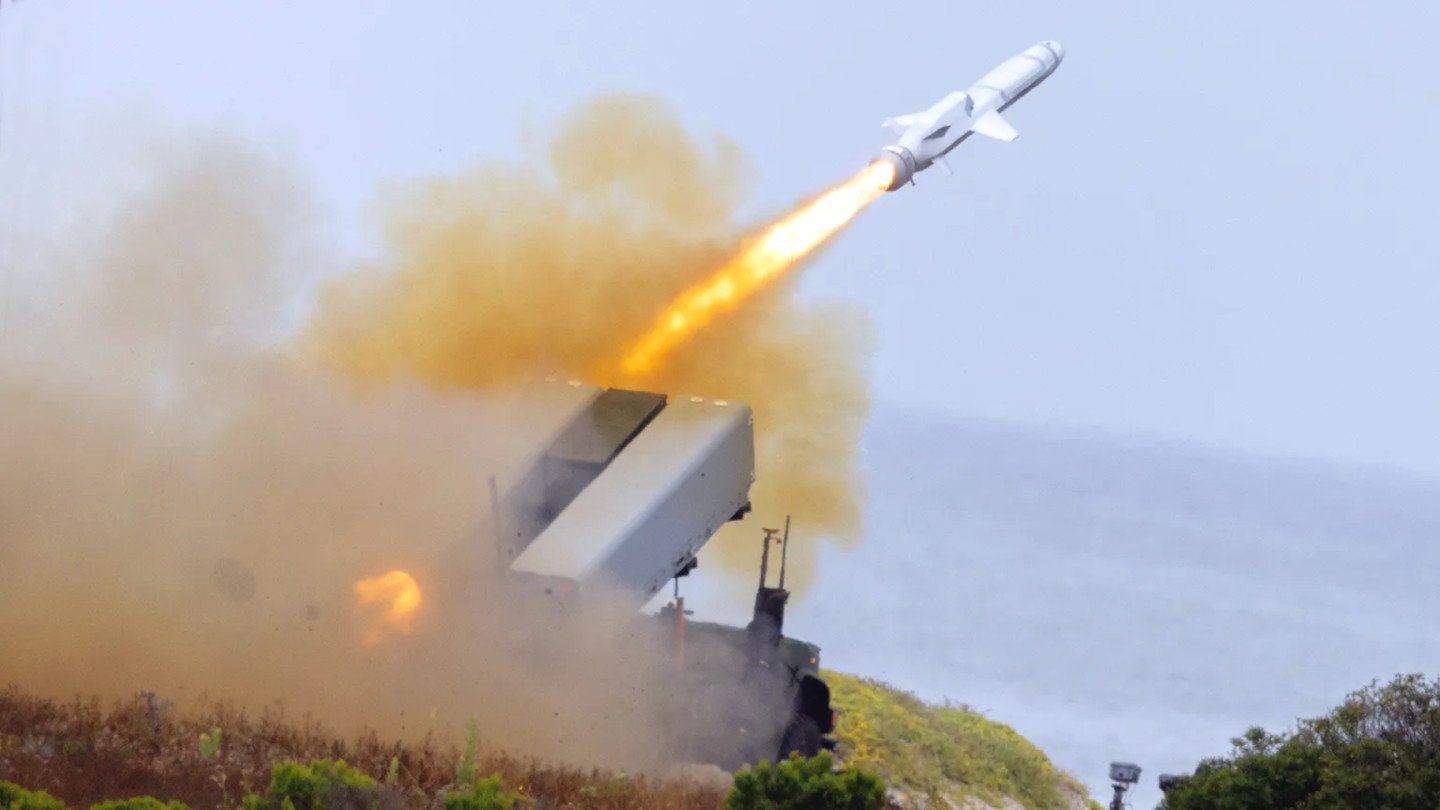
WASHINGTON — The United States Marine Corps is actively exploring technological pathways to at least double the operational reach of its ground-launched Naval Strike Missile anti-ship cruise missiles. Achieving a strike capability exceeding 270 nautical miles would substantially expand the defensive and offensive zones that Marine missile batteries can hold at risk during future expeditionary campaigns.
A Marine Corps spokesperson confirmed the current baseline during recent military assessments. "The range of the Naval Strike Missile is 135 nautical miles," the spokesperson stated, adding that "the Marine Corps is currently exploring opportunities to more than double the range of the NSM."
The existing 135 nautical mile figure reflects previous performance enhancements introduced with the Block 1A variant during the early 2020s. Developed jointly by Norway’s Kongsberg and American defense contractor Raytheon, earlier iterations of the cruise missile were constrained to approximately 100 nautical miles under standard operational flight profiles.
Expanding this standoff distance remains a critical priority for the Corps as it refines distributed maritime operations and island-hopping doctrines across contested littorals. Enhanced range directly reduces platform vulnerability while increasing tactical flexibility for ground forces operating in austere coastal environments.
The Naval Strike Missile currently serves aboard Navy Independence-class Littoral Combat Ships and forms the core armament of the Navy-Marine Expeditionary Ship Interdiction System. Broader integration plans involve equipping Freedom-class vessels and select Arleigh Burke-class destroyers, alongside growing international adoption of both ship-launched and land-based configurations.








Reader Discussion (0)
MODERATED · NO LINKS OR SPAMLoading reader comments...